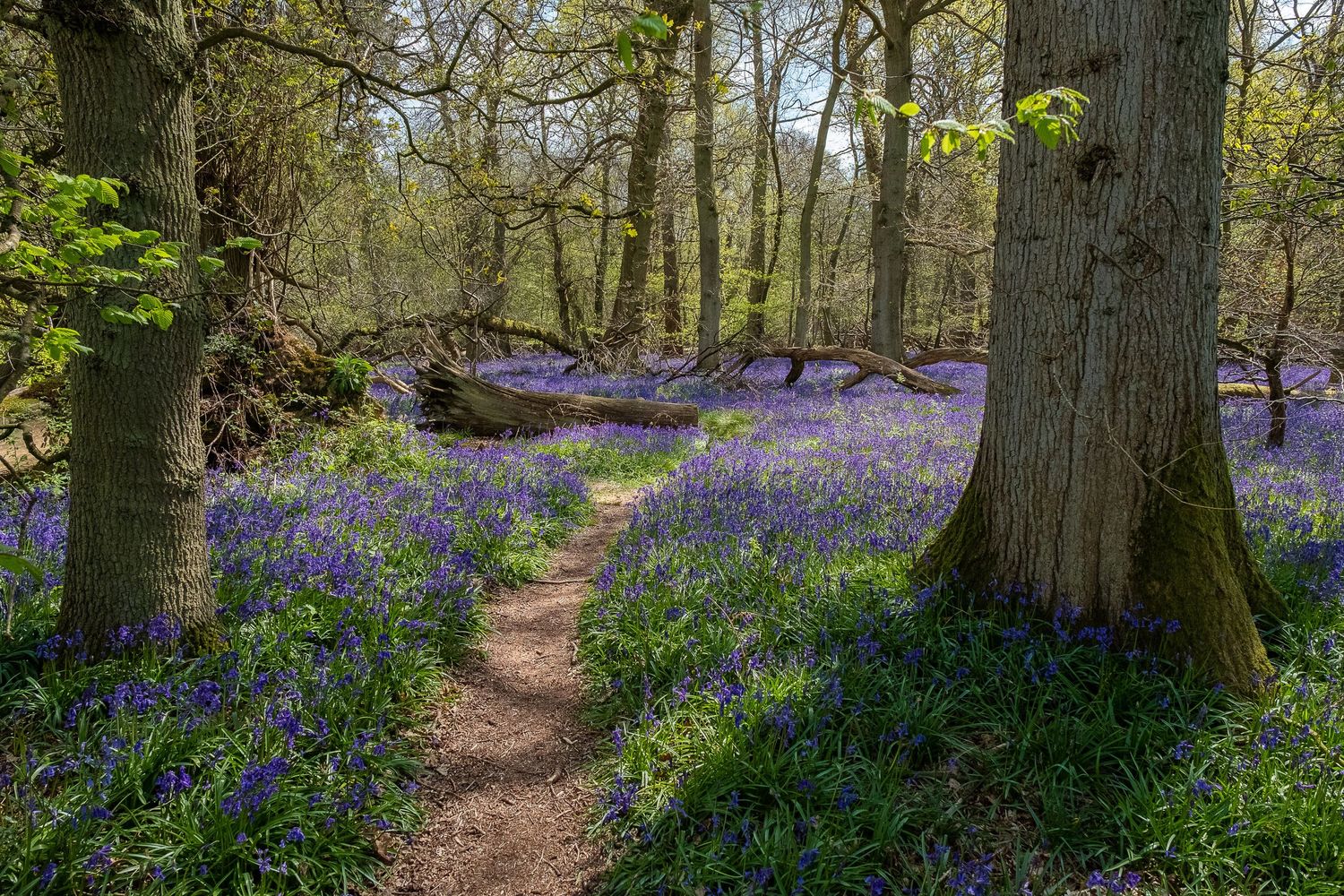
There are many hours of research that proves how beneficial a view of nature is for our physical and mental health, how it helps recovery and also supports flourishing in healthcare, school and the office.
Improving the environment that surrounds you is key to giving yourself a positive emotional, psychological and physical experience. Installing large or small curated views of nature not only creates a more creative, productive and positive environment, but they also make your interiors seem bigger than they are.
Chose from a wide gallery of Canvas prints, Printed acoustic panels, Hyper real and chemical resistant prints (ideal where infection control is paramount, eg healthcare or laboratory environments), Framed prints or large scale vinyl walls coverings or wallpapers.
Florence Nightingale in her "Notes on Nursing" written in 1898 says:
"I have seen, in fevers (and felt, when I was a fever patient myself), the most acute suffering produced from the patient (in a hut) not being able to see out of window, and the knots in the wood being the only view. I shall never forget the rapture of fever patients over a bunch of bright-coloured flowers. I remember (in my own case) a nosegay of wild flowers being sent me, and from that moment recovery becoming more rapid.
This is no fancy.
People say the effect is only on the mind. It is no such thing. The effect is on the body, too. Little as we know about the way in which we are affected by form, by colour, and light, we do know this, that they have an actual physical effect. Variety of form and brilliancy of colour in the objects presented to patients are actual means of recovery."
Research
One minute to breathe. How images of nature can help save our A&E staff. Emergency departments are some of the most punishing workplaces in healthcare. Clinicians move in seconds from breaking catastrophic news to families, to resuscitating a dying patient, to reassuring a parent whose child has a simple fever. We rightly talk a lot about patient experience. We talk far less about what these relentless environments do to the people who work in them.
A pilot study published in the Journal of Biophilic Design suggests that something as simple as one minute of looking at nature-based art can measurably ease that burden.
To read the research: Journal of Biophilic Design, Issue 18, Interior Design (2025), pp. 50-61 “Impact of a brief viewing of biophilic art on the affective wellbeing of clinicians in the Emergency Department”
To read the research paper, please download The Journal of Biophilic Design, Issue 18, Interior Design (2025) here: https://journalofbiophilicdesign.com/shop/journal-of-biophilic-design-issue-18-interior-design-digital-download or buy a high quality coffee table reference Book version here: https://journalofbiophilicdesign.com/shop/journal-of-biophilic-design-issue-18-interior-design-printed-coffee-table-reference-copy
Effects of exposure to immersive videos and photo slideshows of forest and urban environments
Fariba Mostajeran, Jessica Krzikawski, Frank Steinicke & Simone Kühn
Scientific Reports volume 11, Article number: 3994 (2021) https://doi.org/10.1038/s41598-021-83277-y
A study was done in 1984, which revealed that patients who looked at views of nature
recovered faster, had lower blood pressure, needed less medication and were less stressed. The
psychological impact of seeing views had a positive result on the wellbeing and health of the
patient. View Through a Window May Influence Recovery from Surgery, ROGER S. ULRICH Science 224 (4647):429-1 DOI: 10.1126/science.6143402
Environments dominated by elements of Nature are thought to be restorative. Attention Restoration Theory offers an alternative way of explaining psychological benefits of Nature. Kaplan R, Kaplan S. The Experience of Nature: A Psychological Perspective. Cambridge University
Press; Cambridge, UK: 1989
Gamble, K. R., Howard, J. H. Jr. & Howard, D. V. Not just scenery: Viewing nature pictures improves executive attention in older adults. Exp. Aging Res. 40, 513–530 (2014).
Tuena, C. et al. Usability issues of clinical and research applications of virtual reality in older people: A systematic review. Front. Human Neurosci. 14, 93 (2020).
Ulrich, R. S. Natural versus urban scenes: Some psychophysiological effects. Environ. Behav. 13, 523–556 (1981).
Nightingale, Florence, Notes on Nursing, 1898. Gutenberg, open access "I remember a case in point. A man received an injury to the spine, from an accident, which after a long confinement ended in death. He was a workman—had not in his composition a single grain of what is called "enthusiasm for nature"—but he was desperate to "see once more out of window." His nurse actually got him on her back, and managed to perch him up at the window for an instant, "to see out." The consequence to the poor nurse was a serious illness, which nearly proved fatal. The man never knew it; but a great many other people did. Yet the consequence in none of their minds, so far as I know, was the conviction that the craving for variety in the starving eye, is just as desperate as that of food in the starving stomach, and tempts the famishing creature in either case to steal for its satisfaction. No other word will express it but "desperation." And it sets the seal of ignorance and stupidity just as much on the governors and attendants of the sick if they do not provide the sick-bed with a "view" of some kind, as if they did not provide the hospital with a kitchen."
".that [patients] should be able, without raising themselves or turning in bed, to see out of window from their beds, to see sky and sun-light at least, if you can show them nothing else, I assert to be, if not of the very first importance for recovery, at least something very near it."
"I have seen, in fevers (and felt, when I was a fever patient myself), the most acute suffering produced from the patient (in a hut) not being able to see out of window, and the knots in the wood being the only view. I shall never forget the rapture of fever patients over a bunch of bright-coloured flowers. I remember (in my own case) a nosegay of wild flowers being sent me, and from that moment recovery becoming more rapid.
This is no fancy.
People say the effect is only on the mind. It is no such thing. The effect is on the body, too. Little as we know about the way in which we are affected by form, by colour, and light, we do know this, that they have an actual physical effect. Variety of form and brilliancy of colour in the objects presented to patients are actual means of recovery."
Kweon, B.-S., Ulrich, R. S., Walker, V. D. & Tassinary, L. G. Anger and stress: The role of landscape posters in an office setting. Environ. Behav. 40, 355–381 (2008).
Slater, M. & Wilbur, S. A framework for immersive virtual environments (five): Speculations on the role of presence in virtual environments. Presence Teleoper. Virtual Environ. 6, 603–616 (1997).
Jo, H., Song, C. & Miyazaki, Y. Physiological benefits of viewing nature: A systematic review of indoor experiments. Int. J. Environ. Res. Public Health 16, 4739 (2019)
Tennessen, C. M. & Cimprich, B. Views to nature: Effects on attention. J. Environ. Psychol. 15, 77–85 (1995).
Kim, T.-H. et al. Human brain activation in response to visual stimulation with rural and urban scenery pictures: A functional magnetic resonance imaging study. Sci. Total Environ. 408, 2600–2607 (2010).
Anderson, A. P. et al. Relaxation with immersive natural scenes presented using virtual reality. Aerosp. Med. Human Perform. 88, 520–526 (2017).
Yu, C.-P., Lee, H.-Y. & Luo, X.-Y. The effect of virtual reality forest and urban environments on physiological and psychological responses. Urban For. Urban Green.35, 106–114 (2018).
Smith, J. W. Immersive virtual environment technology to supplement environmental perception, preference and behavior research: A review with applications. Int. J. Environ. Res. Public Health 12, 11486–11505 (2015).
An, M., Colarelli, S. M., O’Brien, K. & Boyajian, M. E. Why we need more nature at work: Effects of natural elements and sunlight on employee mental health and work attitudes. PLoS One 11, e0155614 (2016).
Wang, X., Shi, Y., Zhang, B. & Chiang, Y. The influence of forest resting environments on stress using virtual reality. Int. J. Environ. Res. Public Health 16, 3263 (2019).
Malkin J (2008). "A visual reference for evidence-based design". Center for Health Design.
Malkin, Jain; The Business Case for Creating a Healing Environment published article written by Jain Malkinand published by The Center for Health Design, 2003
Kaplan, R. The nature of the view from home: Psychological benefits. Environ. Behav. 33, 507–542 (2001).
Hansen-Ketchum, P., Marck, P. & Reutter, L. Engaging with nature to promote health: New directions for nursing research. J. Adv. Nurs. 65, 1527–1538 (2009).
Rizzo, A. . S. & Kim, G. . J. A Swot analysis of the field of virtual reality rehabilitation and therapy. Presence Teleoper. Virtual Environ. 14, 119–146 (2005).
Depledge, M. H., Stone, R. J. & Bird, W. Can natural and virtual environments be used to promote improved human health and wellbeing? (2011).
Browning, M. H., Saeidi-Rizi, F., McAnirlin, O., Yoon, H. & Pei, Y. The role of methodological choices in the effects of experimental exposure to simulated natural landscapes on human health and cognitive performance: A systematic review. Environ. Behav. 0013916520906481, 10 (2020).
Browning, M. H., Mimnaugh, K. J., van Riper, C. J., Laurent, H. K. & LaValle, S. M. Can simulated nature support mental health? Comparing short, single-doses of 360-degree nature videos in virtual reality with the outdoors. Front. Psychol. 10, 20 (2019).
Calogiuri, G. et al. Experiencing nature through immersive virtual environments: Environmental perceptions, physical engagement, and affective responses during a simulated nature walk. Front. Psychol. 8, 2321 (2018).
Chung, K., Lee, D. & Park, J. Y. Involuntary attention restoration during exposure to mobile-based 360 virtual nature in healthy adults with different levels of restorative experience: Event-related potential study. J. Med. Internet Res. 20, e11152 (2018).
Maller, C., Townsend, M., Pryor, A., Brown, P. & St Leger, L. Healthy nature healthy people:‘Contact with nature’ as an upstream health promotion intervention for populations. Health Promotion Int. 21, 45–54 (2006).
Yin, J., Zhu, S., MacNaughton, P., Allen, J. G. & Spengler, J. D. Physiological and cognitive performance of exposure to biophilic indoor environment. Build. Environ. 132, 255–262 (2018).
Palanica, A., Lyons, A., Cooper, M., Lee, A. & Fossat, Y. A comparison of nature and urban environments on creative thinking across different levels of reality. J. Environ. Psychol. 63, 44–51 (2019).
Frumkin, H. Healthy places: Exploring the evidence. Am. J. Public Health 93, 1451–1456 (2003).
Chirico, A. & Gaggioli, A. When virtual feels real: Comparing emotional responses and presence in virtual and natural environments. Cyberpsychol. Behav. Soc. Netw. 22, 220–226 (2019).
Lee, J., Park, B.-J., Tsunetsugu, Y., Kagawa, T. & Miyazaki, Y. Restorative effects of viewing real forest landscapes, based on a comparison with urban landscapes. Scand. J. For. Res. 24, 227–234 (2009).
Lee, J. et al. Influence of forest therapy on cardiovascular relaxation in young adults. Evid. Based Compl. Altern. Med. 2014, 20 (2014).
Chun, M. H., Chang, M. C. & Lee, S.-J. The effects of forest therapy on depression and anxiety in patients with chronic stroke. Int. J. Neurosci. 127, 199–203 (2017).
Kim, H., Lee, Y. W., Ju, H. J., Jang, B. J. & Kim, Y. I. An exploratory study on the effects of forest therapy on sleep quality in patients with gastrointestinal tract cancers. Int. J. Environ. Res. Public Health 16, 2449 (2019).
Kaplan, R. The psychological benefits of nearby nature. In Role of Horticulture in Human Well-Being and Social Development: A National Symposium 125–133 (Timber Press, Arlingto, 1992).
Leather, P., Pyrgas, M., Beale, D. & Lawrence, C. Windows in the workplace: Sunlight, view, and occupational stress. Environ. Behav. 30, 739–762 (1998).
Look back here for more research, we update this page regularly with new research or VIEW THE GALLERY